
"Ethiopian coffee grades"
2000 article(s) found

A brief introduction to the planting situation of Ethiopian boutique coffee beans, geographical location, climate and altitude
Although the Ethiopian Yirgacheffe coffee is petite, it is gentle and delicate and sweet. As the hometown of coffee, thousands of years of planting history and processing tradition in Ethiopia have created high-quality washed Arabica beans. Light baking has unique sweet aromas of lemon, flowers and honey, soft acidity and citrus flavors, fresh and bright on the palate. No.

What is the grading and quality control system of Ethiopian coffee?
Professional coffee knowledge exchange more coffee bean information please follow the coffee workshop (Wechat official account cafe_style) in Ethiopia, coffee grading and quality control system is divided into producer, regional and national levels. All coffee is inspected by local inspection agencies before leaving the country of origin, and then re-inspected at the coffee inspection and grading centers in Addis and Diredawa.

A brief introduction to the History and Culture of the Origin and Development of Ethiopian Fine Coffee beans with Multi-level taste
In Ethiopia, the grading and quality control system of coffee is divided into three levels: producer, regional and national. All coffee is inspected by local inspection agencies before leaving the country of origin, and then re-tested at the coffee inspection and grading centers in Addis and Diredawa to determine its quality grade. Coffee is graded before auction and sale, for all involved in production, acquisition,

Introduction of Coffee Flavor and Taste characteristics in Xidamo Chiso producing area of Ethiopia
In February 1977, Lieutenant Colonel Mengistu Haier Maryam (MENGISTU HAILE MARIAM) launched a military coup and served as Chairman of the interim military Administrative Council and head of State. In 1979, the Ethiopian Labor people's Party Organization Committee, dominated by soldiers, was established to implement an one-party system. In 1984, the Ethiopian Workers' Party was formed according to the Soviet Communist Party model. Mengistu, September 1987

Ethiopian coffee beans with floral apricot peaches Location Climate Altitude Profile
Ethiopia's Yirgacheffe coffee is petite, but gentle and sweet. As the home of coffee, Ethiopia's millennia of growing and processing traditions have resulted in high-quality washed Arabica beans. Light baked with unique lemon, floral and honey sweet aromas, soft fruit acids and citrus notes, fresh and bright taste. not

Ethiopian Coffee-Wash Coffee Yerga Sherfi Flavor Introduction
Yirgacheffe Coffee has a strong floral flavor. Washed Yerga Sherfi is one of the world's finest high quality coffee, with soft acidity and rich body. Top and Bebeka coffee, low in acidity but high in body, is an indispensable member of the blend coffee. Grade of Ethiopian coffee: Ethiopian washed coffee Ye Jia Xue Fei G1 G2 West Damo (Yi

Introduction to the producing area of Coffee Flavor description Grinding scale in Yega Ficher Manor, Ethiopia
Ethiopian coffee flavor description grinding scale varieties introduce the grades of Ethiopian coffee: Ethiopian washed coffee Yega Sheffield G1 G2 Sidamo (Yirgacheffe, Sidamo) the highest grades are Grade 2 and 3 (G2, G3), while sun-processed coffee in eastern Ethiopia is mostly Grade 4 or Grade 5 (G4, G5). In many affections
Ethiopian coffee varieties with wine-like sour taste introduce boutique coffee beans
In Ethiopia, the grading and quality control system of coffee is divided into three levels: producer, regional and national. All coffee is inspected by local inspection agencies before leaving the country of origin, and then re-tested at the coffee inspection and grading centers in Addis and Diredawa to determine its quality grade. Coffee is graded before auction and sale, for all involved in production, acquisition,

A brief introduction to the treatment method of grinding degree and baking degree of aromatic high-quality Ethiopian coffee beans
Ethiopia finally woke up and decided to learn from the skills of Western developed countries in mastering brands and creating value for the benefit of hard-working farmers, so in March 2005, Ethiopia applied to the United States Patent and Trademark Administration for the trademark rights of three famous places of origin, namely, Sidamo, Yega Xuefei and Harald. In the future, American operators must be authorized by Ethiopia to sell boutique coffee in these three places.

A brief introduction to the history and culture of the origin and development of sweet Ethiopian boutique coffee beans
Getachew Mengistie, director of Ethiopia's Bureau of intellectual property, bluntly pointed out that farmers sell raw beans for $1.45 a pound, while Starbucks sells for $26 a pound in the United States, 18 times the price difference between the two places. The reason is that Ethiopia does not know how to use intellectual property rights to create value for farmers, as long as the name of Ethiopian high-quality beans, it can be higher than the average in the United States.

A brief introduction to the flavor and aroma characteristics of Ethiopian boutique coffee beans
Ethiopia's Yega Coffee is Ethiopia's most important export cash crop and a major source of Ethiopia's foreign exchange earnings. Ethiopia's coffee exports account for about 3% of the world market, making it the eighth largest coffee exporter in the world. Coffee exports increased steadily from 58000 tons in 1990-1991 to 110000 tons in 1995-96, and remained at this level for the next few years.

Introduction to the characteristics of the manor producing area with strong flavor of Ethiopian coffee
In Ethiopia, the grading and quality control system of coffee is divided into three levels: producer, regional and national. All coffee is inspected by local inspection agencies before leaving the country of origin, and then re-tested at the coffee inspection and grading centers in Addis and Diredawa to determine its quality grade. Coffee is graded before auction and sale, for all involved in production, acquisition,

A brief introduction to the treatment method of grinding degree and baking degree of Ethiopian boutique coffee beans
Even the official research unit of Ethiopia does not know how many Arabica subspecies there are in Ethiopia. The coffee cooperatives in this mountain are certainly different from those planted in another mountain, and even small farmers in the same region grow different varieties of coffee. Like the little Jasper of Suzhou, although she is petite, she is gentle and delicate, sweet and lovely, and can attract ten thousand without any decoration.

What do you recommend for Ethiopian coffee? Characteristics of coffee beans in Ethiopia
Professional coffee knowledge exchange more coffee bean information please follow the coffee workshop (Wechat official account cafe_style) ● descendants of King Solomon and Queen Sheba Ethiopians regard themselves as descendants of King Solomon and Queen Sheba, the lion is the symbol of power of their country, the country's population reached 102403196 in 2016, (12th in the world), is the world's most populous landlocked country

A brief introduction to the treatment method of grinding degree and baking degree of sweet Ethiopian boutique coffee beans
Even the official research unit of Ethiopia does not know how many Arabica subspecies there are in Ethiopia. The coffee cooperatives in this mountain are certainly different from those planted in another mountain, and even small farmers in the same region grow different varieties of coffee. Like the little Jasper of Suzhou, although she is petite, she is gentle and delicate, sweet and lovely, and can attract ten thousand without any decoration.

Multi-layered taste of Ethiopian fine coffee beans Flavor Taste Aroma Description Introduction
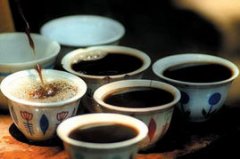
The girl scraped the powder out bit by bit with a small wooden spoon and poured it into a small-necked, bulging, big-eared earthenware pot. She added clean water and boiled it on a small stove. The water boiled very quickly. After boiling for a while, the fragrance was already overflowing. The girl placed several china cups the size of wine cups on a small wooden box, then lifted the big ear of the coffee pot to fill each cup one by one, and then put down the pot, one cup at a time.

Introduction to the characteristics of Ethiopian native variety heirloom coffee beans the difference between heirloom and Landrace coffee
Professional coffee knowledge exchange more coffee bean information please follow the coffee workshop (Wechat official account cafe_style) class minions-phylum-class-order-family-genus-species, coffee is Rubiaceae coffee, including three major varieties Arabica species Arabica, Robusta species Robusta and Lee

A brief introduction to the flavor and taste characteristics of Ethiopian coffee manor with rich alcohol thickness
In the West, Ethiopian coffee is generally sold on the market as Yega Feixidamo and Harald (Yirgacheffee, Sidamo and Harrar). The highest grades of Ethiopian washed coffee Yega Chuefei G1 G2 Sidamo (Yirgacheffe, Sidamo) are Grade 2 and Grade 3 (G2, G3), while most of the sun-processed coffee in eastern Ethiopia are Grade 4 or Grade 5 (G4, G5).

An introduction to the Flavor description of the Manor in Xidamo Shachiso, Ethiopia
Ethiopian beans are easily recognizable, mostly small and pointed long beans, known as longberry, and often mixed with small oval-shaped short beans, called shortberry, which look uneven in size and appearance. The commercial bulk beans of Grade4 or Grade5 are mostly mixed with hundreds of different crystal seeds in different producing areas, so the phenomenon of uneven bean phase is the most obvious.
Grading and quality Control system of Ethiopian Coffee
In Ethiopia, the grading and quality control system of coffee is divided into three levels: producer, regional and national. All coffee is inspected by local inspection agencies before leaving the country of origin, and then re-tested at the coffee inspection and grading centers in Addis and Diredawa to determine its quality grade. Coffee is graded before auction and sale, for all involved in production, acquisition,